Weekly Planer Mastery: Optimizing Personal and Professional Workflows
In an era defined by digital saturation and constant connectivity, the act of physical planning has re-emerged as a critical tool for cognitive management. While applications and cloud-based calendars offer convenience, they often contribute to the very screen fatigue that hampers productivity. A dedicated Weekly Planer serves as more than a mere scheduling device; it functions as an external hard drive for the brain, allowing professionals, educators, creators, and business owners to offload mental clutter onto paper. The effectiveness of this analog system relies heavily on the specific architecture of the tool itself. When utilizing a carefully designed weekly planner interior, users can transform abstract time management concepts into tangible, actionable frameworks that fit seamlessly into a mobile lifestyle.
The Cognitive Architecture of a Carefully Designed Weekly Planner Interior
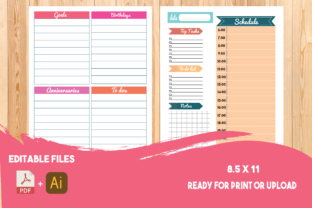
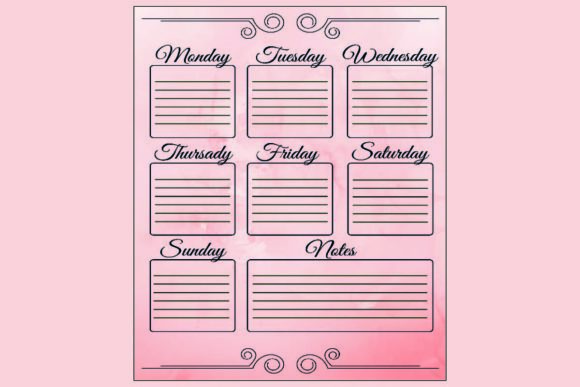
The efficacy of any planning system is dictated by its visual hierarchy and spatial organization. A generic grid often fails because it treats all hours and tasks with equal weight, ignoring the nuanced reality of modern work and life. A carefully designed weekly planner interior addresses this by incorporating intentional whitespace, segmented tracking areas, and intuitive flow patterns. This design philosophy reduces friction during the planning process. When opening to a new spread, the user should immediately understand where to place high-priority objectives versus routine maintenance tasks without expending decision-making energy on formatting.
For researchers and academics, this structured interior provides a framework for deep work blocks alongside administrative duties. For business owners, it allows for the separation of strategic planning from operational firefighting. The layout acts as a silent coach, guiding the user toward balanced time allocation. Furthermore, the aesthetic quality of a beautiful weekly planner interior plays a psychological role in adherence. Visual appeal increases the likelihood of consistent engagement; when a tool is pleasing to interact with, the habit of daily review and reflection becomes self-reinforcing rather than a chore. This intersection of form and function ensures that the planner supports sustained attention rather than distracting from it.
Practical Logistics: The 6x9 Inch Form Factor and Print-Ready Accessibility
Portability is often the deciding factor between a planner that lives on a desk and one that integrates into a dynamic lifestyle. The 6x9 inch size represents a strategic compromise between writing surface area and transportability. Unlike larger formats that require a dedicated workspace, the 6x9 dimension fits comfortably in standard bags, backpacks, and even large coat pockets. This makes it exceptionally practical for professionals who move between meeting rooms, educators transitioning between classrooms, or hobbyists working in various environments. The size is substantial enough to allow for legible handwriting and detailed note-taking yet compact enough to remain unobtrusive during collaborative sessions.
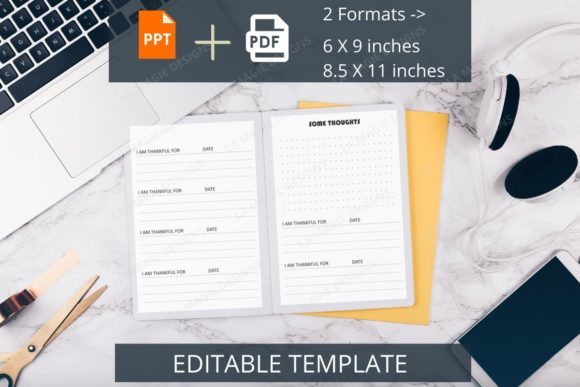
Accessibility further enhances the utility of this system through the provision of one PDF file ready to print 100 pages. This digital-first delivery model offers unparalleled flexibility for diverse user needs. Users are not locked into a single pre-printed volume; instead, they possess a master asset that can be reproduced as needed. For those testing new productivity methodologies, this allows for low-risk experimentation. If a particular month requires heavier documentation, additional sections can be printed instantly. Educators can print specific copies for semester planning, while business owners might generate separate copies for distinct projects or quarterly reviews. This print-ready nature eliminates the anxiety of "ruining" a planner, encouraging honest tracking and authentic usage over performative neatness.
Operationalizing Time: How It Helps to Organize Your Day Across Domains
The primary value proposition of a robust Weekly Planer lies in its ability to convert intention into execution. Organization is not merely about listing tasks; it is about contextualizing them within available time and energy. For creators and artists, the planner helps organize the day by distinguishing between generative phases and administrative phases. By visually blocking out time for creative flow separate from email correspondence or marketing tasks, the planner protects the mental state required for high-quality output. The physical act of writing these blocks reinforces commitment in a way that dragging a calendar event cannot.
For professionals and corporate workers, the system aids in organizing the day through prioritization matrices embedded within the weekly view. Rather than reacting to the loudest demand, users can map urgent versus important tasks before the day begins. This proactive stance reduces decision fatigue and prevents the mid-afternoon slump caused by unstructured time. In educational settings, students and teachers utilize the planner to organize the day around fixed class schedules while carving out essential study or grading windows. The tactile feedback of checking off completed items provides a dopamine response that sustains motivation through long-term projects. Ultimately, the planner serves as a boundary-setting device, clearly defining when work ends and personal time begins, which is essential for preventing burnout across all user demographics.
Autonomy and Customization: Using the System on Your Own Terms
A significant advantage of this specific planning resource is its inherent adaptability. You can use it on your own without reliance on proprietary ecosystems, subscription fees, or complex software learning curves. This autonomy is vital for users who require privacy or who operate outside standard corporate structures. Researchers handling sensitive data may prefer a physical record that leaves no digital footprint. Hobbyists pursuing niche interests benefit from a system that does not force their unique workflows into standardized categories.
The independence of this system also encourages methodological evolution. Because you can use it on your own terms, the planner can morph as your life changes. A freelancer might use the weekly spread for client project tracking during busy seasons and switch to habit tracking during slower periods. Parents might dedicate specific zones to family logistics and meal planning alongside professional commitments. There is no prescribed "correct" way to engage with the material. This freedom fosters a deeper sense of ownership over one’s time management strategy. When the tool belongs entirely to the user, free from external updates or feature deprecations, it becomes a stable anchor in an unpredictable world.
Maximizing the Utility of a 100-Page Planning Cycle
The specification of 100 pages suggests a focused cycle of approximately three to four months, depending on usage density. This duration aligns perfectly with natural productivity rhythms such as academic quarters, fiscal quarters, or seasonal project sprints. Understanding how to leverage this specific page count is key to long-term success. Rather than viewing the planner as an endless repository, users should approach it as a contained experiment in efficiency.
- Quarterly Sprints: Business owners can align the 100-page limit with Q1, Q2, Q3, or Q4 goals, creating a clean break and review point every ninety days.
- Semester Alignment: Educators and students can map the page count directly to a university term, ensuring the planning tool expires naturally with the curriculum.
- Habit Formation Cycles: Psychologists suggest that habit formation varies significantly; a 100-page volume provides sufficient repetition to solidify new routines without the daunting commitment of a full year.
- Project-Based Boundaries: Creators can dedicate a single printed volume to the lifecycle of a specific book, exhibition, or product launch, keeping all relevant temporal data contained in one archive.
This finite scope reduces the psychological weight of planning. Starting a fresh 100-page PDF feels manageable and invigorating, whereas staring at an empty 400-page annual book can induce paralysis. The ability to print exactly what is needed means that if a user completes a cycle early or needs to pivot, there is no wasted paper or guilt associated with unused pages. This modular approach to physical planning respects the non-linear nature of modern productivity.
Integrating Analog Planning into Digital Ecosystems
While the Weekly Planer is fundamentally analog, it operates most effectively when acknowledged as part of a broader hybrid ecosystem. It does not need to replace digital tools but rather complement them. The careful design of the interior facilitates this integration. For instance, reference numbers or project codes from digital task managers can be transcribed into the planner to create a bridge between platforms. Meeting notes taken in the 6x9 format can be easily photographed and archived in cloud storage systems like Evernote or Notion, combining the cognitive benefits of handwriting with the searchability of digital databases.
For remote workers and distributed teams, this hybrid approach is particularly relevant. The physical planner manages personal focus and daily execution, while shared digital calendars handle coordination and availability. This separation prevents the "always-on" culture of digital collaboration from invading personal planning space. The beautiful weekly planner interior serves as a sanctuary of individual agency amidst collective digital demands. By maintaining this distinction, users preserve the restorative qualities of analog planning while remaining fully functional in a technology-driven environment.
Evaluating Effectiveness Through Consistent Review
The true measure of any planning system is not its initial setup but its sustained utility over time. A carefully designed weekly planner interior facilitates regular review cycles through built-in reflection prompts or summary sections. These structural elements encourage users to look backward before moving forward, transforming the planner from a simple logbook into a learning instrument. Professionals can analyze time estimates versus actuals to improve future scoping. Students can identify peak performance hours to optimize study schedules. Creators can track energy levels relative to output quality.
Because the system is practical and portable, these reviews can happen anywhere—during a commute, in a waiting room, or over morning coffee. The 6x9 size ensures the planner is always at hand when moments of reflection arise. The print-ready nature means that if a review reveals a need for different tracking metrics, the next printed iteration can be adjusted accordingly. This continuous improvement loop is what distinguishes a serious productivity practice from mere stationery appreciation. The Weekly Planer becomes a mirror reflecting not just how time is spent, but how life is being lived, offering clarity and control in an increasingly complex world.