2021 Monthly Planner Printables Floral: Integrating Custom Assets into Digital and Physical Workflows
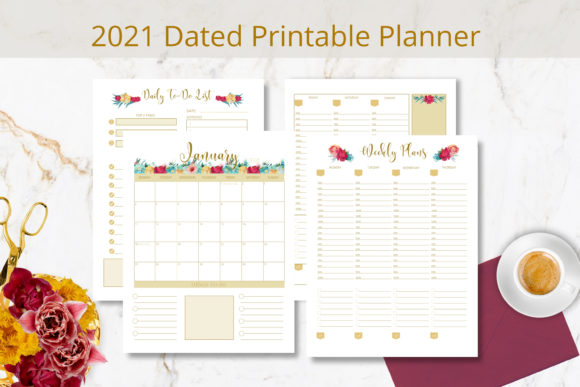
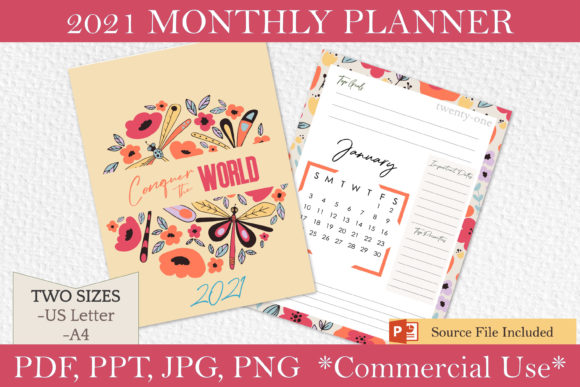
Effective planning requires more than just blank grids; it demands a system that aligns with specific aesthetic preferences and functional requirements. The 2021 Monthly Planner Printables Floral collection serves as a foundational asset for creators, publishers, and productivity enthusiasts who need to bridge the gap between digital organization and physical documentation. This resource provides thirteen dated monthly calendar pages alongside nine versatile cover and divider designs, but its true value lies in its adaptability within broader creative and administrative workflows. Rather than functioning as a static end-product, these files act as modular components that integrate seamlessly into PowerPoint editing environments, Kindle Direct Publishing (KDP) pipelines, and personal binder systems.
For professionals managing multiple projects or entrepreneurs building a product line, the ability to manipulate source files is critical. This collection distinguishes itself by including editable PowerPoint source files in both A4 and US Letter sizes. This compatibility ensures that users are not locked into a rigid template. Instead, the floral interiors become a starting point for customization, allowing for font adjustments, graphic modifications, and structural changes that reflect individual branding or personal taste. Understanding how to leverage these assets before, during, and after production phases maximizes their utility and prevents the common pitfall of publishing generic content.
Strategic Preparation and Asset Customization
Before initiating any publishing project or organizing a yearly planning system, preparation involves assessing the specific needs of the end-user or personal workflow. When utilizing the 2021 Monthly Planner Printables Floral, the initial phase should focus on file management and environment setup. Because the package includes separate PPT files for A4 and US Letter dimensions, selecting the correct format at the outset prevents formatting errors later in the process. For KDP sellers, this decision is dictated by market research and niche requirements. For personal users, it depends on whether the final output will be a standard office binder or a specialized planner size.
The inclusion of editable source files necessitates a review of licensing and ethical use standards. While the ability to edit fonts and graphics allows for significant differentiation, the license strictly prohibits selling or sharing the source file itself. This restriction protects the intellectual property of the creator while empowering the user to build unique derivative works. During the preparation stage, users should establish a dedicated workspace within PowerPoint. This includes setting up master slides for consistent header and footer placement, defining color palettes that complement the existing floral aesthetics, and preparing any additional assets, such as inspirational quotes or tracking logs, that will be interspersed between the monthly calendars.
Customization is the primary mechanism for adding value. For publishers, simply uploading the provided PDF results in a product identical to others in the marketplace. To avoid this saturation, the preparation phase must include a design audit. Identify which elements of the floral theme resonate with your target audience and which require modification. Perhaps the font needs to be more modern, or the dividers require space for handwritten notes. Making these decisions before assembly streamlines the production process and ensures the final planner feels cohesive rather than assembled from disparate parts.
Workflow Integration for Publishers and Creators
For KDP sellers and digital product creators, these printables function as an intermediate asset within a larger manufacturing process. The workflow typically moves from concept to customization, then to compilation, and finally to quality assurance. The nine included covers and dividers play a pivotal role here. They are designed to be mixed and matched, allowing creators to break up the monotony of monthly grids. In a practical publishing workflow, these dividers serve as natural insertion points for value-added content. Entrepreneurs can insert motivational quotes, habit trackers, goal-setting worksheets, or educational content relevant to their specific niche between each month.
This modularity supports a "mix-and-match" strategy that enhances product uniqueness. Users are encouraged to combine these floral pages with other printables from different collections. For example, a wellness coach might pair the floral monthly views with specialized mindfulness journaling pages, while a financial advisor might integrate budget tracking sheets. The PowerPoint source file facilitates this integration by allowing all elements to exist within a single, editable document. This eliminates the need to merge multiple PDFs externally, reducing the risk of alignment issues and ensuring uniform margins throughout the book.
Efficiency in this stage also involves understanding what this product is not. It is explicitly noted that this is not a ready-to-upload full book. Treating it as such undermines its potential. The workflow should involve active construction rather than passive upload. Sellers should view the thirteen calendar pages and nine dividers as raw materials. The time invested in editing the source file—changing typography, adjusting layout spacing, or adding proprietary branding—is what transforms a commodity into a distinct intellectual property. This approach aligns with platform guidelines that favor original content and reduces the likelihood of account flags associated with duplicate content.
Personal Organization and Physical Implementation
Beyond commercial publishing, the 2021 Monthly Planner Printables Floral offers robust utility for personal productivity and small business administration. For individuals who prefer tactile planning over digital apps, these files provide a professional-grade alternative to store-bought planners. The workflow here shifts from digital editing to physical assembly. Users can print the PDF files directly and incorporate them into existing binders, disc-bound systems, or spiral-bound notebooks. The availability of both A4 and US Letter sizes ensures compatibility with standard paper stocks and binding mechanisms found in most offices and homes.
In a personal workflow, the dividers serve a dual purpose. Functionally, they organize the year into manageable segments. Psychologically, they provide a visual reset between months, reinforcing the floral aesthetic and maintaining engagement with the planning process. Users can customize the printed output by handwriting goals or affixing stickers before binding, creating a hybrid analog-digital system. For educators or freelancers, printing specific months on demand allows for flexible planning cycles that do not necessarily adhere to the standard January-December academic or fiscal year. The digital nature of the source file means users can reprint damaged pages or create multiple copies of specific months for project-based tracking without purchasing new supplies.
Integration with other tools is seamless. These printable pages work well alongside digital note-taking apps when used as a reference anchor. A user might maintain high-level strategy in a digital tool while using the printed floral planner for daily execution and reflection. The aesthetic consistency of the floral design helps create a focused environment, reducing cognitive load associated with cluttered or mismatched stationery. By treating the printable as a core component of a personal operating system, users ensure that their planning tool evolves with their changing needs throughout the year.
Quality Control and Long-Term Usability
Whether producing a book for sale or a binder for personal use, quality control is the final but most critical step in the workflow. For those editing in PowerPoint, verifying margins and bleed settings is essential before export. The source files provide a baseline, but any addition of text or graphics must respect safe zones to prevent content from being trimmed during printing or binding. Users should perform test prints on their intended hardware to check color accuracy, especially given the detailed nature of floral graphics. Inkjet and laser printers render colors differently, and screen brightness often misrepresents actual print output. Adjusting saturation or contrast in the source file may be necessary to achieve the desired aesthetic in physical form.
Long-term usability depends on file organization and version control. When customizing the 2021 Monthly Planner Printables Floral, save iterative versions of the PowerPoint file. This practice preserves the original template while documenting changes made for specific projects. If a user creates a successful variation for one niche, having a record of the modifications allows for easy replication or adaptation for future years. For KDP sellers, maintaining a library of customized assets speeds up the creation of subsequent products. The initial effort spent learning the source file's structure pays dividends in reduced production time for future releases.
Ultimately, the effectiveness of this resource hinges on the user's willingness to engage with the process. It is designed for those who understand that true utility comes from adaptation. By respecting the licensing terms, leveraging the editability of the PowerPoint files, and integrating the floral aesthetics into a thoughtful workflow, users transform simple calendar pages into powerful tools for organization and creation. The result is a planning system or published product that is not only functional and beautiful but also distinctly aligned with the specific goals and identity of its creator.