Evaluating the 20 Sudoku Bundle for KDP Interiors
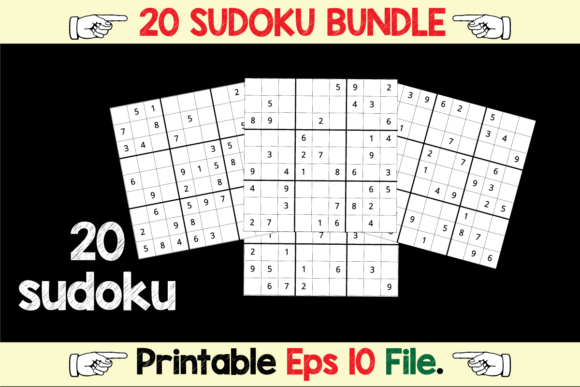
For self-publishers operating within the Amazon Kindle Direct Publishing (KDP) ecosystem, sourcing high-quality interiors is a critical step in product development. The 20 Sudoku Bundle, which provides twenty distinct puzzle files in EPS format for a nominal fee of three dollars, represents a specific tier of digital asset acquisition. This resource targets creators who require scalable vector graphics for low-content book publishing. Understanding the utility, limitations, and strategic application of this bundle requires an objective assessment of its technical specifications and market fit.
Defining the Asset: Technical Specifications and Format
The core value proposition of the 20 Sudoku Bundle lies in its file format. Unlike raster-based images such as JPEG or PNG, EPS (Encapsulated PostScript) is a vector format. For KDP interiors, this distinction is significant. Vector files allow for infinite scaling without loss of resolution, ensuring that grid lines remain crisp and numbers stay sharp regardless of the trim size selected for the final publication. When evaluating this bundle, it is essential to verify that the EPS files are properly layered and editable.
In many cases, budget-friendly bundles provide flattened vectors or outlined text. While these are sufficient for direct printing, they limit customization. A fully functional EPS interior should ideally allow users to modify stroke weights, adjust cell dimensions, or replace placeholder puzzles with unique content generated via external software. Prospective buyers must determine whether the included files serve as finished pages ready for upload or as templates requiring further manipulation in software like Adobe Illustrator, Inkscape, or Affinity Designer.
Cost-Benefit Analysis at the Three Dollar Price Point
The pricing structure of this bundle places it in the micro-transaction category for digital assets. At three dollars for twenty files, the cost per unit is approximately fifteen cents. From a purely financial perspective, this lowers the barrier to entry for new publishers testing the puzzle niche. However, evaluation should extend beyond the initial price tag to consider the total cost of ownership, including time investment.
If the EPS files require significant cleanup, reformatting, or if the puzzles themselves are static and non-editable, the time spent preparing them for print may outweigh the monetary savings. Conversely, if the files are production-ready and compliant with KDP’s bleed and margin requirements, the return on investment is substantial. Buyers should weigh their available time against their budget; those with more capital than time might prefer premium, pre-formatted manuscripts, while those optimizing for low startup costs will find this bundle aligns with their constraints.
Strategic Fit: When This Bundle Supports Publishing Goals
Certain publishing scenarios make the 20 Sudoku Bundle a pragmatic choice. It is particularly relevant for creators focusing on volume and variety rather than bespoke, premium puzzle books. The following situations highlight where this asset performs best:
- Rapid Prototyping: Publishers testing new cover designs or keyword strategies can use these interiors to create minimum viable products quickly without investing in custom design work.
- Mixed-Media Activity Books: For creators compiling activity books that include mazes, word searches, and coloring pages, having a standardized set of sudoku grids fills space efficiently and adds perceived value.
- Bonus Content Creation: Established authors often use puzzle pages as lead magnets or bonus material at the back of journals and planners. The low cost makes this a risk-free addition to existing products.
- Learning Vector Manipulation: New designers can use these affordable files as practice material for learning EPS editing workflows before committing to expensive commercial licenses.
In these contexts, the bundle serves as a functional utility. The expectation should be one of adequacy and efficiency rather than exclusivity or high-end differentiation.
Tradeoffs and Limitations to Consider
Objective evaluation necessitates acknowledging potential downsides. Assets at this price point often come with tradeoffs that impact long-term viability. One primary concern is market saturation. Because the barrier to entry is low, thousands of sellers may utilize identical or similar interiors. If the 20 Sudoku Bundle contains generic layouts that are widely distributed, books created with them may struggle to stand out in search results.
Additionally, licensing terms require careful scrutiny. Buyers must confirm whether the license permits commercial use in unlimited quantities or if there are caps on sales. Some budget bundles restrict usage to personal projects or require attribution, which is incompatible with KDP publishing. Another consideration is puzzle uniqueness. If the EPS files contain hard-coded puzzles that cannot be regenerated, the publisher is limited to exactly twenty unique layouts. For a 100-page puzzle book, this necessitates purchasing multiple bundles or combining this asset with other sources, potentially complicating formatting consistency.
Comparing Alternatives and Decision Frameworks
Determining whether the 20 Sudoku Bundle is the right solution involves comparing it against available alternatives. Each option serves different segments of the publishing market.
Puzzle Generation Software: Tools like Puzzle Wiz or Book Bolt offer dynamic generation capabilities. While the upfront cost is higher, they provide unlimited unique puzzles and automated formatting. This alternative is superior for publishers planning to produce dozens of puzzle books annually. The 20 Sudoku Bundle is less suitable for high-volume producers but remains viable for occasional projects.
Premium Interior Marketplaces: Platforms like Creative Fabrica or Etsy offer higher-priced bundles ($15–$30) that often include editable source files, solution keys, and varied difficulty levels. These are preferable for publishers building a premium brand identity. The three-dollar bundle competes on price, not feature depth.
Custom Design Services: Hiring a freelancer ensures unique, branded interiors. This is necessary for publishers seeking trademarkable series or distinctive visual styles. The bundle cannot replace custom design but can supplement it during early-stage testing.
Practical Evaluation Checklist
Before acquiring the 20 Sudoku Bundle, prospective users should apply the following decision matrix to ensure alignment with their objectives:
- Verify Editability: Open a sample file to confirm layers are intact and text is not outlined unless intended.
- Audit License Terms: Ensure commercial KDP use is explicitly permitted without restrictive clauses.
- Assess Formatting Compliance: Check margins, bleed settings, and gutter safety zones against current KDP guidelines.
- Evaluate Uniqueness: Search Amazon for books using identical interiors to gauge competitive density.
- Calculate Time Investment: Estimate hours needed for customization versus the monetary savings achieved.
This structured approach moves the decision beyond impulse purchasing toward strategic asset acquisition. The 20 Sudoku Bundle offers legitimate utility for specific use cases, provided expectations are calibrated to its price tier and technical reality.
Aligning Assets with Long-Term Publishing Strategy
Ultimately, the decision to utilize the 20 Sudoku Bundle should integrate with broader business goals. For publishers in the exploration phase, it reduces financial risk while validating niche interest. For established creators, it functions as supplementary inventory. However, reliance on ultra-low-cost assets as a primary production method may limit scalability and brand differentiation over time.
Sustainable KDP businesses typically evolve from generic resources toward proprietary or highly customized interiors. This bundle can serve as a stepping stone in that progression. By understanding its precise role within the production workflow, publishers can leverage its affordability without compromising quality standards or market positioning. The key is intentional selection based on verified specifications rather than price alone, ensuring that every acquired asset contributes meaningfully to portfolio growth and reader satisfaction.