Evaluating KDP Interior Bundle Vol.1 for Low-Content Publishing
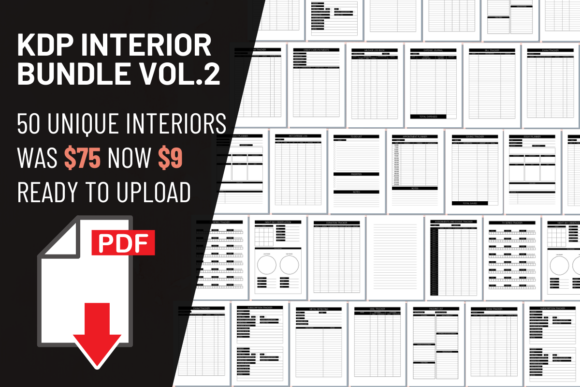
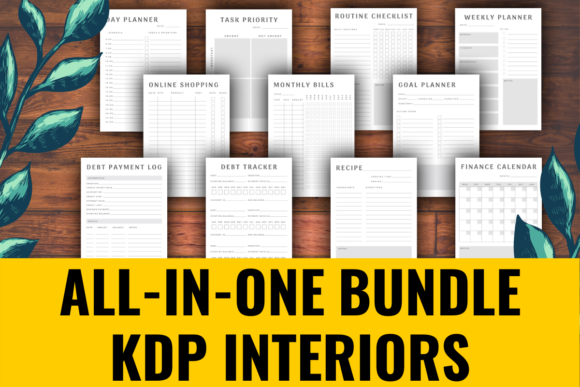
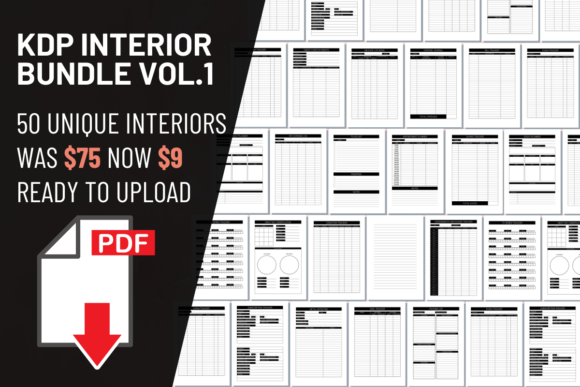
For self-publishers and digital product creators, the barrier to entry on Amazon KDP has lowered significantly, but the operational friction of creating unique interiors remains high. KDP Interior Bundle Vol.1 addresses this specific bottleneck by providing a pre-formatted library of assets designed for immediate use. Rather than functioning as a creative inspiration pack, this bundle operates as a production utility. It contains 50 distinct interior templates formatted for three standard trim sizes, intended to reduce the time spent on layout design and technical formatting. For professionals managing multiple titles or entrepreneurs testing niche viability, the value proposition lies in workflow acceleration and cost efficiency rather than artistic novelty.
Technical Specifications and Platform Compliance
The primary concern for any KDP publisher is file rejection due to formatting errors. This bundle is engineered specifically to mitigate those risks through strict adherence to platform standards. Each of the 50 interiors is delivered as a PDF at 300 DPI, ensuring print clarity that meets Amazon’s minimum requirements for crisp text and line art. The files are configured with no bleed, which simplifies the upload process for low-content books where edge-to-edge printing is unnecessary or undesirable.
Versatility in trim size is essential for targeting different market segments within the same niche. The inclusion of three specific dimensions allows publishers to adapt content without resizing:
- 8.5 x 11 inches: The standard for journals, planners, and educational workbooks requiring maximum writing space.
- 6 x 9 inches: The most popular trade paperback size, ideal for travel journals, gratitude logs, and portable notebooks.
- 8.25 x 6 inches: A landscape-oriented format often used for sketchbooks, guest books, and specialized loggers.
Page counts range from 60 to 120 pages per interior. This variance is strategically useful; it allows creators to offer tiered products within the same series (e.g., a "Quick Log" versus a "Comprehensive Journal") without altering the core design language. Because these files are ready to upload, they eliminate the need for margin adjustments or gutter calculations, which are common failure points during the KDP proofing stage.
Economic Analysis and Cost Efficiency
When evaluating digital assets for business use, unit economics matter more than the sticker price. At a price point of $9, KDP Interior Bundle Vol.1 presents a significant deviation from standard market pricing. Purchasing 50 comparable interiors individually would typically result in a substantially higher expenditure. The stated savings of approximately 88% suggests a bulk-discount model aimed at volume users rather than casual hobbyists.
From a return-on-investment perspective, the break-even point is remarkably low. If a single published book generates even modest royalties, the entire bundle cost is recouped. For publishers who treat KDP as a volume-based business model, this pricing structure reduces the overhead associated with inventory creation. Instead of allocating budget to custom designers or expensive software subscriptions for layout tools, capital can be redirected toward keyword research, advertising, or cover design—areas that directly influence discoverability and sales conversion.
Workflow Integration and Time Management
Time is often the scarcest resource for freelancers and side-hustle entrepreneurs. Creating a high-quality, error-free interior from scratch can take anywhere from two to six hours depending on complexity and proficiency with design software. Multiplying this by 50 units reveals the true scale of the asset. By utilizing pre-made interiors, the production phase shifts from creation to curation.
This shift enables rapid prototyping. A publisher can test five different journal niches in the time it would normally take to produce one. If a specific niche shows traction, the publisher already possesses compatible interiors to expand the line. Conversely, if a niche underperforms, the sunk cost in production time is minimal. This agility is critical in the current KDP landscape, where market saturation requires faster iteration cycles to identify profitable opportunities.
Practical Applications and Audience Fit
While the bundle offers broad utility, its effectiveness depends heavily on the user's specific goals and experience level. Understanding who benefits most helps prevent mismatched expectations.
Ideal User Profiles
- Volume Publishers: Creators who manage large catalogs and require consistent, reliable baselines for their books. The uniformity of the bundle ensures brand consistency across series.
- Niche Researchers: Marketers and entrepreneurs validating new keywords. The low cost per unit allows for broad testing without financial risk.
- Beginners: New authors who lack design skills but want professional-looking results immediately. The technical compliance removes the steepest part of the learning curve.
- Educators and Coaches: Professionals creating supplementary materials or lead magnets. The 8.5 x 11 format is particularly relevant for worksheets and curriculum companions.
Limitations and Strategic Considerations
Objectivity requires acknowledging where this resource may fall short. As a bundle of 50 unique interiors, there is an inherent limit to customization. While the files are ready to upload, they are static PDFs. Users cannot easily alter fonts, add logos, or modify structural elements without advanced PDF editing software or source files. This makes the bundle less suitable for authors seeking highly branded, bespoke experiences or complex interactive elements.
Furthermore, because these are commercially available assets, exclusivity is not guaranteed. In highly competitive niches, relying solely on stock interiors without differentiation (such as unique covers, enhanced descriptions, or bundled value) may lead to commoditization. Successful users typically treat KDP Interior Bundle Vol.1 as a foundation rather than a final product. Pairing these interiors with distinctive cover designs and targeted metadata is necessary to stand out in search results.
Quality Assessment and Long-Term Value
Durability of digital assets is measured by their continued relevance and technical integrity. The 300 DPI resolution ensures that these interiors will remain viable even as print technology improves; they meet current archival standards for print-on-demand. The "no bleed" specification also future-proofs the files against minor trimming variances, reducing customer complaints regarding cut-off content.
The variety of page counts (60–120) adds longevity to the purchase. Seasonal trends often dictate optimal book length; a Q4 holiday gift guide might require 120 pages, while a summer travel tracker might perform better at 60. Having both options available in the same package prevents the need for additional purchases as market demands fluctuate throughout the year.
Making the Decision
Ultimately, KDP Interior Bundle Vol.1 should be evaluated as a productivity tool rather than a creative masterpiece. Its strengths are logistical: speed, compliance, variety, and price. For professionals and serious creators looking to streamline operations and reduce per-unit production costs, it offers tangible utility. However, those seeking deep customization or exclusive rights should view this as a starting point or supplement to their existing toolkit.
Potential buyers should assess their current pipeline bottlenecks. If interior creation is slowing down publication frequency or consuming disproportionate resources, this bundle provides a direct solution. If the challenge lies elsewhere—in marketing, cover design, or niche selection—the bundle solves a problem you may not have. Aligning the purchase with specific operational needs ensures that the investment translates into measurable publishing output. For detailed specifications and to verify compatibility with your current projects, visiting the product page is recommended to review sample layouts before acquisition.