Elevating Low-Content Publishing: The Strategic Value of the Mermaid Lined Journal Canva Template
The landscape of self-publishing has undergone a profound transformation over the last decade. What was once a niche hobby for writers has evolved into a sophisticated sector of the digital economy, driven by print-on-demand (POD) technologies and accessible design tools. Within this ecosystem, the creation of low-content books—journals, planners, and notebooks—has emerged as a viable business model for entrepreneurs, marketers, and creatives. However, as market saturation increases, the margin for error decreases. Success no longer comes from simply uploading a generic lined notebook; it requires strategic differentiation, aesthetic precision, and workflow efficiency. This is where specialized assets like the Mermaid Lined Journal Canva Template play a pivotal role in bridging the gap between creative vision and commercial viability.
Redefining Efficiency in Digital Product Creation
For professionals and freelancers operating in the creator economy, time is the most scarce resource. The traditional route of designing a 120-page journal interior from scratch involves significant technical overhead. One must calculate bleed margins, ensure gutter safety zones, manage consistent line spacing, and verify resolution standards for platforms like Amazon KDP. A single miscalculation can result in rejected files or poor customer reviews due to printing errors. The Mermaid Lined Journal Canva Template addresses these friction points by providing a pre-validated infrastructure.
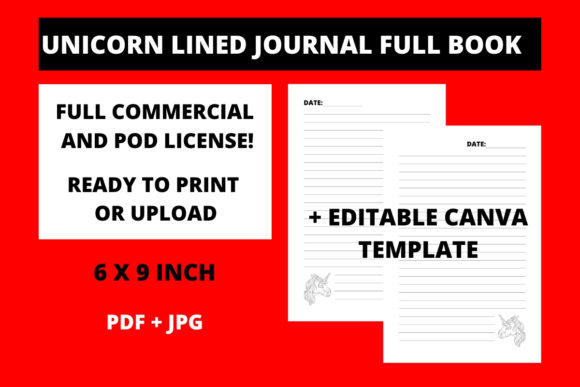
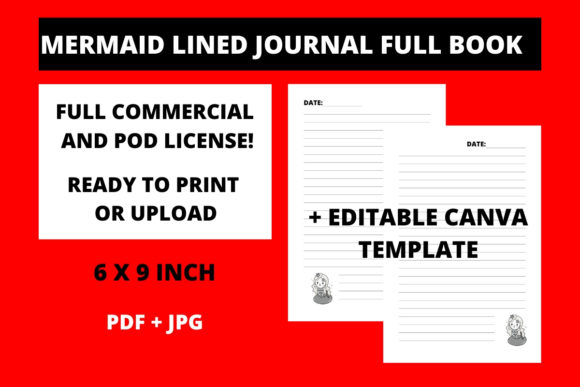
This template is not merely a collection of graphics; it is a production-ready asset. By offering a PDF file containing an editable Canva template alongside a separate PDF that is already formatted and ready to print, it caters to two distinct user needs simultaneously. Creators who wish to build a unique brand identity can utilize the editable source to add logos, modify headers, or insert custom introductory pages. Conversely, publishers focused on speed-to-market can leverage the pre-formatted 120-page document to bypass the design phase entirely. This duality reflects a broader shift in digital tooling, where products are expected to be both flexible enough for customization and robust enough for immediate deployment.
Aesthetic Niches and Consumer Psychology
Understanding why a specific theme like "mermaid" resonates requires looking beyond surface-level aesthetics. In the current consumer market, particularly within the stationery and journaling communities, there is a strong psychological pull toward escapism and fantasy. As digital fatigue grows, consumers are seeking tactile experiences that offer a sense of wonder and tranquility. The mermaid archetype, associated with oceanic depth, mystery, and fluidity, aligns perfectly with the introspective nature of journaling.
From a marketing perspective, this specificity is crucial. Generic journals compete in a red ocean of identical products. Niche-themed interiors, however, target long-tail keywords and specific audience segments. When a marketer or entrepreneur utilizes the Mermaid Lined Journal Canva Template, they are not just selling paper; they are selling an emotional experience. The inclusion of high-quality JPG files for right and left pages ensures that the visual narrative remains consistent throughout the book, reinforcing the thematic immersion that modern consumers expect. This attention to detail transforms a simple notebook into a collectible item, increasing perceived value and justifying higher price points.
The Technical Standards of Modern KDP Publishing
Quality assurance is the cornerstone of sustainable publishing businesses. Platforms have become increasingly stringent regarding file specifications, and customer expectations have risen in tandem. A common pitfall for new publishers is the presence of watermarks or low-resolution artifacts in their final products. These issues signal amateurism and can permanently damage a brand’s reputation. It is essential to note that professional-grade templates explicitly guarantee no watermarks of any kind on the final product. This assurance is critical for commercial use, ensuring that the publisher retains full rights and presents a pristine product to the marketplace.
Furthermore, the standard 6 x 9 inch trim size supported by this template represents the industry sweet spot for trade paperbacks and journals. It is large enough to provide ample writing space yet compact enough for portability. By adhering to this standardized dimension, creators ensure compatibility with global distribution channels and meet reader expectations for form factor. The provision of separate JPG files for left and right pages also demonstrates an understanding of book binding mechanics, allowing for mirrored designs that account for the gutter and create a cohesive spread when the book lies open.
Integration into Broader Creative Workflows
The relevance of such templates extends beyond individual book creation; they serve as foundational elements in larger business strategies. For educators, coaches, and therapists, branded journals act as tangible touchpoints in client relationships. A marine biology educator might use a mermaid-themed journal as a companion workbook for students, while a wellness coach could position it as a mindfulness tool for clients drawn to aquatic imagery. The ability to edit the Canva template allows these professionals to integrate their own logos and proprietary content, transforming a stock asset into a bespoke organizational tool.
This adaptability speaks to the changing nature of freelance and entrepreneurial workflows. Professionals are increasingly adopting modular approaches to product development. Rather than reinventing the wheel for every new offering, they curate and customize high-quality base assets. The Mermaid Lined Journal Canva Template fits seamlessly into this agile methodology. It reduces the barrier to entry for physical product creation, allowing service-based businesses to diversify their revenue streams without requiring advanced graphic design skills or expensive software licenses.
Navigating Market Saturation Through Quality Assets
As the low-content publishing space matures, the distinction between spam and legitimate product offerings becomes defined by quality and intent. Algorithms and human reviewers alike are prioritizing content that offers genuine utility and aesthetic coherence. Utilizing a professionally designed template signals a commitment to quality that separates serious publishers from opportunistic uploaders. The structured format of the 120-page interior provides a substantial volume of content that feels like a complete product rather than a thin pamphlet, which is often a marker of low-effort submissions.
Moreover, the availability of instructions within the PDF download empowers users to maximize the asset's potential. This educational component is vital for maintaining industry standards. When creators understand how to properly manipulate the template, export files correctly, and maintain design integrity, the overall quality of the marketplace improves. This creates a positive feedback loop where better tools lead to better products, which in turn raises consumer trust in self-published goods.
Future-Proofing Your Publishing Portfolio
Looking forward, the integration of AI and automated design tools will continue to reshape the publishing landscape. However, the human element of curation and thematic consistency will remain irreplaceable. Templates like this one represent a hybrid approach that leverages technological efficiency while preserving artistic direction. They allow creators to focus on the strategic aspects of publishing—keyword research, cover design, advertising, and audience engagement—rather than getting bogged down in repetitive layout tasks.
For entrepreneurs building a portfolio of journals, consistency across titles is key to brand recognition. Starting with a reliable, editable template establishes a baseline for quality that can be replicated across future releases. Whether expanding into other fantasy themes or adapting the mermaid aesthetic for different age groups, having a mastered workflow centered around professional assets ensures scalability. The Mermaid Lined Journal Canva Template is more than a single product; it is a case study in efficient, aesthetically driven publishing that meets the demands of today’s discerning market.
Practical Considerations for Implementation
When integrating this template into your workflow, consider the following practical applications to maximize its value:
- Brand Alignment: Before editing, assess whether the mermaid aesthetic aligns with your existing brand voice. If you are targeting a mature audience, consider using the editable features to mute colors or simplify illustrations for a more sophisticated look.
- Value Addition: Use the editable Canva file to add value-added pages such as goal-setting worksheets, habit trackers, or inspirational quotes relevant to the ocean theme. This moves the product beyond a simple lined journal into the category of guided journals, which often command higher royalties.
- Cross-Promotion: Utilize the first few editable pages to include links to your other books or website. Since the template allows for logo placement and custom pages, treat the interior as prime real estate for building your author platform.
- File Management: Maintain organized records of both the source Canva link and the final print-ready PDF. Having the raw JPG files separately archived allows for quick repurposing for social media marketing or mockup creation without needing to re-export the entire book.
In conclusion, the intersection of creativity and commerce in self-publishing requires tools that honor both disciplines. The Mermaid Lined Journal Canva Template exemplifies this balance, offering a pathway for professionals and enthusiasts to produce high-quality, thematically resonant products with confidence. By leveraging such resources, creators can navigate the complexities of KDP publishing while focusing on what truly matters: connecting with readers through meaningful, beautifully crafted physical books.